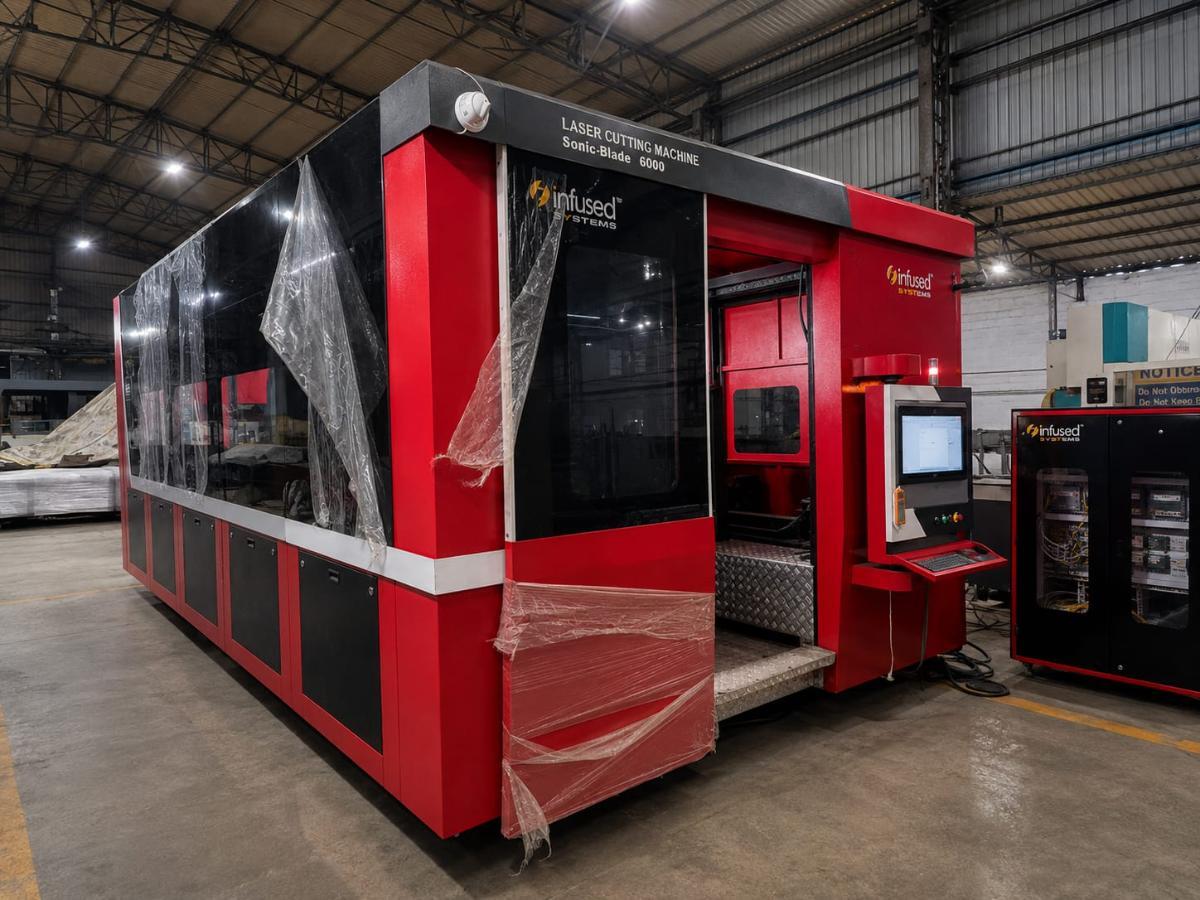
What to Ask During a Laser Cutting Machine Demonstration – Fiber Laser
Choosing an industrial laser cutting system requires a clear understanding of its working capabilities, application requirements and operating conditions. Before selecting equipment, manufacturers should evaluate whether the proposed machine can handle their regular production tasks.
A fiber laser cutting machine demo provides an opportunity to understand the cutting process, discuss technical specifications and identify possible limitations before making a purchasing decision.
However, a useful demonstration should involve more than watching a metal sheet being cut. Buyers should ask relevant questions about their materials, component designs, cutting quality, machine operation and maintenance requirements.
Important Questions to Ask During a Laser Cutting Machine Demonstration
1. Is the Machine Suitable for Our Material Requirements?
Start by discussing the materials regularly used in your manufacturing process.
Ask which material types and grades are suitable for the proposed machine configuration. Also clarify whether the intended material thickness falls within its recommended processing range.
If your workshop processes mild steel, stainless steel, aluminium or other metals, request an application discussion based on those materials.
2. How Will the Machine Perform on Our Component Designs?
A machine may produce good results on a simple sample, but your regular components may involve detailed profiles, holes, curves and different cutting geometries.
Ask whether you can share your component drawings before the demonstration.
Discuss:
Compatibility with your design files.
Cutting requirements for complex profiles.
Dimensional tolerances.
Repeated component processing.
Requirements for different cutting patterns.
Where possible, request a sample test using a drawing from your actual production work.
3. What Should We Observe in the Cutting Results?
During the demonstration, do not evaluate the sample only by its appearance.
Inspect the finished component and ask questions about:
Edge condition and burr formation.
Dimensional consistency.
Cutting quality across different profiles.
Heat-affected areas.
Finishing requirements after cutting.
These observations help determine whether the sample meets the quality expectations of your manufacturing process.
4. How Do Material Thickness and Cutting Parameters Affect Performance?
Cutting parameters vary according to material type, thickness, laser configuration and application requirements.
Ask the technical team how these factors influence the cutting process.
You should also discuss whether different material thicknesses require changes in operating parameters and how cutting quality is maintained under different conditions.
Avoid comparing machine performance using cutting speed alone. The finished result and its suitability for the intended component are equally important.
5. What Machine Configuration Is Required for Our Application?
Machine selection should be based on actual production needs rather than one specification in isolation.
Discuss the following points:
Laser power and its suitability for the intended application.
Available working area.
Sheet dimensions.
CNC control system.
Cutting head configuration.
Material loading arrangements.
Software and drawing compatibility.
The technical team should explain how the proposed configuration relates to your material, thickness and component requirements.
6. What Skills Are Required to Operate the Machine?
Understanding the operating process helps businesses plan operator responsibilities and training.
Ask how cutting programs are prepared, how files are transferred and how operators select appropriate cutting parameters.
Also discuss:
CNC system operation.
Common operating errors.
Alarm identification.
Operator training.
Daily operating checks.
This discussion is particularly useful for manufacturing units introducing laser cutting equipment for the first time.
7. What Maintenance and Safety Requirements Should We Consider?
Before finalising equipment, understand the routine maintenance and safety responsibilities associated with its operation.
Ask about optical component inspection, cutting head maintenance, cooling system checks, consumables and cleaning procedures.
Also discuss protective enclosures, emergency stops, extraction arrangements, electrical safety and operator precautions applicable to the offered configuration.
Request the recommended maintenance schedule and operating documentation.
Fiber Laser Cutting Machine: Arrange an Application Discussion
A technical discussion before the demonstration helps ensure that the selected test is relevant to your manufacturing requirements.
For businesses evaluating a fiber laser cutting machine, the application discussion should cover the actual materials, component drawings and production conditions.
Prepare the following information:
Material Information
Material type and grade.
Regularly used thicknesses.
Sheet dimensions.
Material availability for sample testing.
Production Information
Type of components manufactured.
Approximate production quantity.
Cutting pattern and design complexity.
Required dimensional accuracy.
Expected finished-edge quality.
Workshop Information
Available installation space.
Electrical infrastructure.
Cooling and extraction arrangements.
Material loading and unloading requirements.
This information allows the technical team to understand the application before suggesting a suitable machine configuration or demonstration plan.
What Should You Compare After the Demonstration?
After completing the demonstration, record the observations instead of relying only on a general impression.
Evaluation Point
What to Record
Material compatibility
Tested material and grade
Thickness
Thickness used during the test
Cutting quality
Edge condition and burr formation
Accuracy
Sample dimensions against the drawing
Operation
CNC controls and programming process
Maintenance
Routine inspection and consumables
Installation
Workshop and electrical requirements
Support
Training, service and warranty terms
Comparing these details makes it easier to evaluate different equipment configurations using similar application conditions.
Fiber Laser Cutting Machine Demo in Ghaziabad and Sahibabad
Manufacturing businesses in Ghaziabad and Sahibabad can begin their equipment evaluation by discussing their production requirements and identifying the components they want to test.
For buyers considering a fiber laser cutting machine in Ghaziabad, the discussion should focus on material compatibility, sheet dimensions, cutting requirements and workshop readiness.
A demonstration based on actual application details can help identify technical questions that may not be apparent from a product specification sheet.
Who Can Benefit from an Application-Based Demonstration?
An application-based discussion can be useful for:
Sheet metal fabrication workshops.
Automotive component manufacturers.
Industrial engineering units.
Metal furniture manufacturers.
General fabrication businesses.
Manufacturing units planning production expansion.
Businesses considering an upgrade from their existing cutting process.
Each application has different requirements, so the demonstration should be planned according to the components and materials involved.
Enquiry for a Fiber Laser Cutting Machine Demonstration
If you are planning to evaluate a laser cutting system, prepare your material specifications and sample component drawings before requesting a demonstration.
Discuss the intended application, required cutting quality and production conditions with the technical team. This will help establish the most relevant parameters for the evaluation.
Company: Infused Systems Pvt Ltd
Location: Ghaziabad, Uttar Pradesh, India
Website: https://www.infusedsystems.in/
A well-prepared demonstration helps buyers understand the machine's practical capabilities, identify application-related limitations and make equipment decisions based on their actual manufacturing requirements.
It is ok to contact this poster with commercial interests.
Call seller